Summary
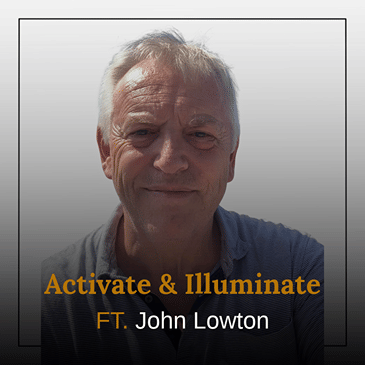
John Lowton shares his remarkable journey of overcoming childhood health challenges, addiction, and emotional trauma, illustrating how resilience and faith can lead to healing and a renewed life. This episode offers deep insights into living authentically and embracing vulnerability.
Chapters
00:00 Introduction to John Lowton and his life story
05:49 Facing emotional trauma and childhood barriers
19:14 The discovery of a hole in the diaphragm and life-changing surgery
19:20 Living with undiagnosed health issues and their effects
12:50 Understanding the significance of his life journey
14638:46:14 Connecting with others through online forums and sharing hope
16055:26:19 The importance of sharing personal stories and faith
18249:53:09 Living with purpose and the concept of being chosen
40:04 The impact of childhood emotional neglect and trauma
6:53 The journey through addiction and behavioral dependencies
14:10 The role of faith and recovery in overcoming addiction
07:51 The ongoing journey of recovery and self-awareness
08:02 The metaphor of riding waves of pain and healing
374999:55:01 Support in marriage and family life
22:27 The significance of the book 'My Body Hid a Secret'
43:26 John's poetry and creative expression as healing
44:44 Writing poetry for others and personal growth
713055:32:19 The gift of seeing and encouraging others through poetry
812222:12:53 Connecting with others through art, poetry, and support
44:26:27 Resources and ways to connect with John Lowton
Connect with Melanie Website: https://activateandilluminate.com/ Instagram: https://www.instagram.com/activateandilluminate/ Facebook: https://www.facebook.com/activateandilluminate YouTube: https://www.youtube.com/@activateandilluminatewithmel
[00:00:00] Hi guys, thanks for joining us on the Activate and Illuminate podcast with Mel. I'm your host, Mel. Together we're going to be diving into some stories of ordinary people doing a little bit of extraordinary things. People who've maybe pushed their bodies, their mindsets, or maybe society's paradigms. So you're going to find yourself maybe wanting to laugh, cry, or even be inspired.
[00:00:23] We would invite you to share, like, and subscribe to sign up for our newsletter as well on ActivateAndIlluminate.com. Now just keep in mind that this information that you are going to hear is informational and educational for entertainment purposes only. This does not constitute professional advice of any kind. The views expressed are those of myself and guests only.
[00:00:51] Listeners are encouraged to seek professional and legal advice regarding their own situations. So, thank you for joining us. We appreciate your time, and thanks again for being here.
[00:01:06] Well, thank you everyone for being here. Today I have from the UK, West Yorkshire, England, John Philip Loughton. And we are talking about his life, his book that he's written. His book's called My Body Hit a Secret. And we're going to go into John's story. So welcome, John. John Philip Loughton Thank you for having me. It's great to be here.
[00:01:32] Yeah. Well, thank you for being here. Well, tell us a little bit about why you wrote a book and about your journey of life, you might say. Yeah. I'm afraid I'm going to have to go into a bit of medical stuff, but try and stay with me a bit. I was born in 1960, and I was born with basically my insides all over the place. And when I was born, my parents called me John, which is significant because it means chosen of God.
[00:02:00] And the doctors said to my parents, if he can survive until the age of two, he can have an operation at Great Ormond Street Children's Hospital. Obviously, I survived because I'm here.
[00:02:13] Yeah. But in those first two years, I was very poorly, a lot of projectile vomiting. And I had the operation, and it was congenital, which means from birth, congenital hiatus hernia, which nowadays wouldn't be too bad. In 1960, it was right on the edge of medicine. And my stomach was pushing up into my thoracic cavity. So they, to a degree, they sorted that out.
[00:02:38] However, in my growing years, I was still quite poorly, and I was miles behind other kids physically. And I used to get food stuck in my esophagus probably daily because it wasn't pushing the food down properly. So I used to spend a long time chewing my food.
[00:02:56] And when something got stuck, I used to have to get up from the table. And then when I was small, my parents would tip me upside down. But as I grew, they'd wrap me on the back quite hard until this thing. And it was quite, the whole thing was quite traumatic. Plus the operation when I was two, I had a, what's called a thoracotomy right halfway around my body. And so I grew up, I was late developing because I think my body was putting all its energy into surviving.
[00:03:26] And so I was miles behind the other kids, very shy, extremely shy, blonde hair, blue eyed, very small. And I didn't really speak to girls till I was 18. They were like a different species to me. And so I was miles behind.
[00:03:44] To cut a long story short, I'll come back to some of the emotions surrounding that time. But as later on in life, around the age of 53, I started getting heart pains. And then on my 53rd birthday, I went in to have stents put in. The amazing thing about that was that my mum had always said that the men on her side of the family don't live beyond 53.
[00:04:13] Now on my 53rd birthday, I went in to have stents put in and I felt God was just saying to me, John, you know, I've had my hand on you your whole life and I've still got my hand on you and you're not going to go the way of men in your family. Okay. So I came home from that. And about six months later, I went to see my GP. This is where it gets really interesting. And she sent me in for an MRI scan. She didn't say why. And so I went in for an MRI scan.
[00:04:42] Remember, this is the UK and NHS and all this stuff. So you don't pay for any of this. So I went in for the MRI scan. And I could see them all pointing at the screen. And I thought something, you know, but I went back to see my doctor and she said, well, it's good news and it's bad news. I said, well, what do you mean?
[00:05:02] She said, the good news is it's not cancer. Well, I hadn't even realized she thought it was cancer. The bad news is you've got a hole in your diaphragm. So I said, all right. Okay. So she says, I'm going to send you in to see the thoracic specialist at St. James Hospital in Leeds. So I went in to see this guy. He's got a Greek name, which people shorten to Dr. Papa because his name's so long, you can't pronounce it.
[00:05:29] So I went to see Dr. Papa and it was strange because he had a whole team under him, but he wasn't passing me on to his team. He was, I thought that's strange. It's only a hole in my diaphragm.
[00:05:41] And then I saw something on my notes, which said congenital. So I said to him, do you think this is from birth? She said, yeah, I think it's from birth. And he said, I think there's more going on than what we can see on the MRI scan. So we're going to take you in. You'll have an operation, a small scar, a couple of inches. He said, you know, hopefully everything sorted.
[00:06:02] So I went in, had the operation. And when I came to, I realized I had a scar halfway around my body again, just like as a child, a thoracotomy. And then the doctor came around and as he came into my room, he shook his head and he said, John, it's amazing. So I said, well, what's amazing? And remember you're talking about someone who's very eminent in his field. And he said, John, you have lived your whole life with a loop of your colon in your left.
[00:06:32] Lung space. And he said, over time, that became sort of bonded to your lung wall and to your diaphragm. And he said, so he said, we've sorted it all out. It was also pushing onto your heart, which he said, in his opinion, although this isn't a medical, he said it was causing your heart problems. All right. And he said, we've pushed it all down to where it should be. We've sorted out your diaphragm.
[00:06:59] But one of the concepts, one of the, what that means is that my whole life I've lived with reduced lung space without knowing it. All right. Now, as a child, I was top in my school in cross country running. I don't know if that's what you call it there. So, and I've lived a very active life. Very, very, had three brothers, extremely active. I've done a lot of mountain climbing, a lot of sport. And I came home thinking, wow, you know, God's had his hand on my life.
[00:07:29] And it was a real moment of spiritual opening. When he said, you've lived your whole life, suddenly like my life fell into context. I understood a lot of things. As a result of that, that's called a congenital diaphragmatic hernia. So that's what I've had without knowing alongside my congenital hiatus hernia from birth.
[00:07:56] So I looked it up and about 10 years ago, when I looked it up, you're still talking like 60, 70% of kids born with this in the UK die in around birth. If you go back to 1960, when I was born, it would have been almost everybody. So now it's still about 30% of kids born with it in the UK and the USA die in around birth, which I was staggered at.
[00:08:25] And so I got in touch with a charity in the UK and there's an online forum for the families of kids born with this. So I went onto this forum and I watched for a while and it was parents just talking to each other about how worried they were about their kids when they were born, all the operations they had to go through.
[00:08:48] And I watched and there was so much people grasping for hope, trying to find a bit of hope for their child and a lot of desperation. So I thought, you know what, I'm going to say something. So I kind of came into the forum and I said, I hope you don't mind me saying this. I'm John. And I gave a bit of my history. I said, I've lived now for, you know, 54, 55 years. And, you know, I had a, what's called a Morgani congenical diaphragm hernia from birth.
[00:09:16] And I just want you to know, I've lived a really active life. I have five kids, three by my first marriage, two by my second marriage. And I just want you to know that however bad your child is, has been born, whatever condition, however bad the condition is, they can still live a full life. And honestly, I had so many families get back to me.
[00:09:42] About 40 families got back to me and said, John, so glad you shared that. You've given us hope. One lady said, I've read, because I put a little story in with it about my, I've read your story over my child when she was sleeping. I thought, wow. No, so I have a lot of gratitude. I have a lot of gratitude in my life because I can just see how I believe God has looked after me in my life.
[00:10:11] And he has a purpose for me. And I wasn't called John for no reason, which means chosen one. I believe we're all chosen. It's just that I know I'm chosen. Everybody who's listening, you are chosen. Do you know you're chosen? I'm lucky I know I'm chosen. But that journey has not been without its difficulties.
[00:10:39] My parents were in, I don't know if you, you might understand this. In the UK, if we say people are Victorian. Is that an expression you understand in Canada? Well, I would take that to be, when you say Victorian in my mind, I think of proper, unemotional. Unemotional. Yeah, proper. Very strict. Very strict. Yeah. But that's just how I related in my mind. Not very tactile.
[00:11:08] Not much touch. So I grew up, particularly in the early years of my life, they chilled out a bit later on. But in the early years of my life, there's so many good things about my parents. But in particular, they weren't tactile. They didn't touch hardly any. That's because they themselves grew up in families where there wasn't touch. I understood that.
[00:11:30] But as a child, I received very little touch, except for when I was smacked on the back to have food released from my oesophagus. So I grew up in an environment lacking touch, except for when I was play fighting with my brothers. But apart from that, there was very little touch. And I didn't have a sister. And I was so shy, I didn't talk to girls. So, and the trauma, I now understand it as childhood trauma.
[00:12:00] At the time, obviously, I wouldn't have understood that. But there was a lot of trauma around an operation when you're two. You know, these people invade your body with their scalpels and whatever. You have all these things coming out your head. You know, all this stuff. Plus all the times I was, the stress of being wrapped on the back. There was a lot of trauma. And what you do as a child is you put up the walls. You put up the barriers. You know, you're not coming near me. You know, I know what you adults do.
[00:12:29] You know, so there was a lot of trauma around. And I suppose emotional need. Although I was a very friendly child, there was still a lot of emotional need. And then as I grew up in my, sort of, got to university and probably from university onwards, I, what's the word? I sought comfort in ways which I now understand I shouldn't have sought comfort. And that got to the point of being addictive.
[00:12:58] So I went to, I don't mind saying because I'm open about it. I went to massage places. Not just for a massage. And online chat forums. You know, and I know there'll be people out there that do this addictively. I know there will be. Even watching, right? But I don't judge. Who am I to judge? And they chat addictively. So it's, if you're a guy, you're chatting to five girls or five ladies.
[00:13:28] And you're just going jumping between them all, all the time. And you're feeding your own need. And actually, some of them might be feeding their own need as well. In a codependent, what's called a codependent way. Where you're dependent upon each other, but not in a positive way. And that is, that is addiction. That is, in 12-step terminology, it's, they call it love addiction. I don't call it love addiction because it's not love.
[00:13:56] I prefer, it's being addicted to relationships, I think. And they're feed, they're the things that are feeding your need, if you like. The medicine for your need. However, the more you, the more you do that, the deeper the pain gets. Because it's not real love. When it's not real love, it will just deepen the pain. And at that time, out of university, I didn't have any girlfriends during university. I was too shy. Didn't have my first girlfriend until I was about 24, actually.
[00:14:26] But then after university, I started working in rehab as a project worker. Eventually, I, in terms of my own progression, ended up managing rehab. Residential rehab. So I understood a lot about addiction. And then non-residential rehab. That's the story in itself. But here was I, working with people with chemical addictions and drugs, alcohol, and secondary addictions.
[00:14:53] But I, myself, was addicted to behavioral addictions. Okay. And it caused a lot of destruction in my life. My first marriage ended. Even though I don't have faith, I follow Jesus. Actually, I don't like the word Christian, but I follow Jesus. I am a Christian, but I don't actually like using that word. I prefer to say I follow Jesus. And even though I was in church, even though, you know, I had loads of people around me,
[00:15:22] there was stuff going on that nobody knew about. But it caused me a lot of damage and ended my first marriage. Ended it. It was all my fault. And I don't know what to say. But there comes a time where you have to face up to that. The first step. Am I all right, saying? Am I all right, Mel? At the moment. Yeah. Yeah. Yeah. The first step of doing is being honest with yourself. Actually, I've got a problem. I need to do something about it.
[00:15:52] Go on. So how long did you feel that you experienced that problem? Or do you still struggle with it? Do I still struggle with it? Well, again, in terms of AA and NA and 12 step, they say once an addict, always an addict. Right. I prefer to say that you're always a recovering addict. I think I prefer that terminology. Yeah. I'm a long way along the journey now.
[00:16:21] But I don't have written poetry about this stuff. But if you forget about the issue, then that's when the issue becomes dangerous. So, for example, to put it in terms of an alcoholic, if an alcoholic is a long way in his recovery and then he or she starts to forget where they've come from, that's when it's going to come back and bite you, I think.
[00:16:50] So, I think it's the same with any addiction. You've got to be aware of where you've come from. Therefore, you've got to be continually adapting your lifestyle. Yeah? Do you feel... I would say I don't currently... Can I ask a question, John? Yeah. Yeah. Do you feel whole in the parts of you now that you were trying to fill with this before? Whole.
[00:17:19] I feel wholer than I was. And I think it's... Yeah. More whole, should I say. Is anybody ever whole? Nobody's ever completely whole. And I would also say we're all addicts or we're all recovering because each one of us has behaviours that we do daily to avoid pain to one degree or another. Yeah. So, an obvious thing is we don't talk to...
[00:17:49] We don't start conversations with people because it's too awkward for us to do that. So, that is avoiding the awkwardness. So, you're avoiding pain, for want of a better word. And some people will do that for all their life. All right? So, I would say to one degree or another, we're all addicts. And for some, it's working excessively to avoid facing up to issues. For others, it's shopping excessively, finding comfort in stuff.
[00:18:20] All sorts. There's all sorts. They're endless. Addiction. The types of behavioural addiction. But what I would say is once that decision is made to stop, it's good to involve friends. It's good to be honest. But also, the pain, the emotional pain is tremendous. Right? And that's the thing. You can go to a church. I still go to church. But people can say, you mustn't do that or you mustn't do this.
[00:18:49] That is not enough. It's not enough to just say to someone, you've got to say, actually, do you know what? If you do want to stop, then we will support you through that. We will... We're not here to judge you. We're here to support you. We're here to put people in place for you. We're here to help you in whatever way we can. Because telling someone to stop in itself is not sufficient. Yeah. How is this... So you say it destroyed your first marriage?
[00:19:19] Yeah. And tell me about how your wife sees this in your second marriage. There we are back, John. Sorry. That was my phone going off. Yeah. I'll ask that question again. Tell me how your wife in your second marriage deals with this and how she has supported you through this. That's a difficult question. I think I'm very lucky, actually, because she doesn't dwell on the past much.
[00:19:46] And so what that means is you're free to look ahead and you're free to... Yeah. You're just free. If you've got someone who's always looking back, then it's very hard to move on. So I think I've been very lucky. Yeah. And on the occasions she's needed to forgive, she's been very forgiving. Yeah. That's... I don't think I can say any more than that, really. I've got three kids by my first marriage who are older. They've all... You know, they're all getting on with their own adult lives.
[00:20:17] And I've got a good relationship with all of them, which I'm really grateful for. I've worked hard at that. And then I've got two kids by my second marriage. And even though I'm 65, they are aged 13 and 14. Okay. So I've been a dad twice, if you like. Yeah. The one thing I would say... That's another question. The one thing I would say to guys who are wanting to marry someone younger is obviously that person may want children.
[00:20:47] So if you get married at 50, 51, it's fine when the kids are younger and you're like 55 and the kids are 2, 3, 4, 5. But when you get to 65 and the kids are 13, 14, it's quite hard. When they're partying. When they're partying. Yeah. Yeah. Yeah. Yeah. And you know, you want to go to bed at, you know, half nine or whatever. And they want picking up from their friends at 10, half 10 or whatever.
[00:21:13] So it's, yeah, it's, but that's a different subject. So tell me, tell me. Now the name of your book is My Body Hit a Secret. Yeah. And I find that really interesting because that's the name of your book. But also that's, that's kind of what you say this, this particular period of your life was as well.
[00:21:37] Do you feel like that, that, that kind of, I'm not going to project this statement of guilt and shame, but I'm guessing that, that, that, that guilt and shame that you've probably felt of hiding that secret also impacted your body. I'm sure it did. I'm sure it did. Well, it impacted my, impacted my life really. But what I call relationship addiction, all the stuff I've talked about in the society
[00:22:03] we, we live in, well, particularly in the UK and in, dare I say, in the church, it's a very difficult subject to talk about because people, I can look round. I'm pretty sure I know, you know, four or five, as I look, four or five guys that are involved just by looking, right? But that they won't say anything. And who am I to say something, you know, but it's, it's a very hidden thing in the church.
[00:22:29] Outside of the church, going to massage places, for example, in some sections of society is totally normal, you know? So it, it's not even considered an issue. But of course, when the damage starts to happen, of course it's an issue, you know? And so I've forgotten the question you asked, but. No, that's okay.
[00:22:52] Tell me, so when we, honestly, I, I admire your ability to talk openly, openly about this because most people would not put themselves forward like this. And I think as, as you hear a story, it's hard not to have judgments. It's hard not to have ideas rolling around in your head, right? And so it's, I, I really applaud you for, for being so open about it.
[00:23:18] And my, I guess my, my, my question is you moving forward for people out there that are struggling with this, that want to do something different, that want to show up differently in their lives, that, that no longer want, you know, to, to experience what they're experiencing. How do you suggest? I think once you've reached that point of honesty with yourself, which has to be the starting point
[00:23:47] of actually realizing I have got an issue. And once you've got to that place, then I think it's finding the two or three or one or two people that actually you can talk about it with, because it's very, very difficult on your own to face up to an issue like that. And I think once, once you've found someone that you can share in, that's not going to be judgmental.
[00:24:15] You can start looking for groups of people who maybe are working through the same stuff. And there are groups of people. Yeah. But you see, when I look back at my life, I can see totally, I understand totally how I got to the place where I got to in terms of doing the stuff I did. You know, there's no, I can see the trauma. I can see it. I can see the journey. So in terms of a lot of people will have some sort of journey they've been on.
[00:24:43] So rather than judging myself or judge a person, get to know their journey, you know, and maybe it will, it will put things into context. I mean, isn't that so? Pardon? You know, that, that's so true. I mean, you could apply that to any, any person and any story. When you get to know their journey, the judgment for their life disappears. Yeah. More recently, I was, I think I just dropped you a note before my, uh, my second book has
[00:25:13] come out yesterday on Amazon. Okay. This is the first book, my, my body hit a secret, but which is my life story. Okay. I bought out yesterday. I brought out another book and it's 50 poems. It's, it's, it's time to live again. And, uh, that's also on Amazon and that's really, uh, I haven't even got a copy myself. Yeah.
[00:25:42] So I can't show you it, but people are saying it's really good, John, you know, so, uh, and people I don't know. Um, yeah. And they, that, some of them look at all sorts of areas. There's, uh, seven, sevens, there's seven sections of seven poems. So one of the sections is talking all about poems to do with recovery from trauma and addiction. Okay. So seven of them look at that.
[00:26:10] Seven of them look at, uh, issue of bereavement. Uh, my mom and dad have died both in the past three years. So that's a, you know, it's something that, yes. And I think they're really good. I'm just sharing that. Yeah. Well, we will include that with, with everything in the podcast. John will include that in the show notes. I love the title. It's time to live again. Yeah. I love that. Tell us about that. Right.
[00:26:38] I'm trying to think I can't, my computer skills are not good enough to look at them whilst I'm talking to you. Oh, that's okay. Yeah. Don't, don't, don't, don't, don't, don't try that. We don't have to, we don't have to go into that, but how have you chosen to, to live again? Yeah. At the age of 61, I did a course, Authentic Lives. It was called Online and it didn't cost anything. And it was all encouraged that basically it was trying to encourage people to be more authentic.
[00:27:08] And I thought, you know what? I need to start painting and doing designs and do some poetry. And people were very encouraging on this course. So at the age of 61, I took up design work and poetry. And I love it. I love it. And I love doing poetry. And I love, I call them expressions. I didn't know what, what an expressionist poet was before I expressionist artist was till I, because I come from a sport family.
[00:27:37] There was no, there was no poetry. There was no artwork in my family. It was all sport, sport, sport, sport, sport, sport, sport. And so I remember at the age of 16, uh, my, I got a good mark in my English, but then my English teacher said, John, I wanted to take it further. And she said, she actually said, John, you're not mature enough for English. And I knew physically she was right, but emotionally.
[00:28:05] And I was a very intuitive kid, spent a lot of time daydreaming. And my mind went along different corridors to other children. And I had a relationship with God inside. So I was, my mind was thinking along different corridors. And when they analyzed English texts, I was, I was like, hang on that. I don't quite see it like you see it. And so I would say she was wrong that I wasn't, I just didn't see things the way other kids saw it. So when I got to 61, I thought, you know what?
[00:28:35] I used to enjoy English. I'll start writing poetry. And, uh, I used to do, and in the interim, the only thing I did writing wise was funding applications for charities. And I used to be able to put things in a way where those who were deciding where the money would go liked what I wrote. So anyway, I took up poetry. And the one thing I do do that's a bit different, as well as writing poetry, I write poetry for people, for individuals.
[00:29:00] And you can see that on my website, on my blog, in the top right hand corner, there's, if you, uh, press the link, personal poetry. That's personal poetry, not for me, for individual, for other people. Sometimes when I'm out shopping, I might look at someone and say, oh gosh, they need a poem. So I'll sit down, takes me about 10 minutes, and I'll write a poem for them. And then I'll, I'll go up to them and say, I've just got this poem for you. Or in meetings, or people ask me to write a poem for someone.
[00:29:30] And I love doing it. And each poem, in a small way, I'm stepping out in faith because I don't know if the poem will be liked. I don't know if it'll be right for the person. I'm just believing what I think God's put on my heart. So I dial in and think, what, what's inside me? What, what, some would say it's just intuition. I would say, yes, it's intuition. But hopefully God's involved with that intuition as well. So I do that and I get some fantastic responses from people. So I love doing that.
[00:30:00] That's part of all the things I do. I think that's what I enjoy the most. Yeah. But there are some examples of that on my blog. And any of you that do poetry out there and think about how can I, is there a different way I can use my gift? And that is one way to do it, to go up to people and to think, well, I'll write my poem. Start with friends. You can't go wrong with friends. If it's not very good, then it doesn't matter. They're your friend. But, yeah, it's, I don't know why I'm talking about that.
[00:30:29] It's just what I'm doing now, I think. This episode brought to you by protandimcanada.lifevantage.com. What if you could turn on your body to work like it was supposed to? What if you could have it remember how to handle toxins, stress, and the environment like it used to when you were young? What if it worked for your pets too? What if this is not about supplementing something that is missing, but activating something that has gone dormant? About actually turning on your body to make these things again. Learn how to activate your body now.
[00:30:59] Check us out, protandimcanada.lifevantage.com. You know, you're the first person that I've ever heard. I've heard of, you know, people doing different intuitive readings and different stuff for people. But you're the first person I've ever heard of doing intuitive poems for people. That's beautiful. I'd love to do them. You know, people do busking with their guitar in a small band.
[00:31:26] I'd love to do it with poetry. But I'm still at the place where I'm looking for one or two others. I don't want to be billion-o mates on my own, you know. I want to have two or three people with me doing it, really. So, yeah, I'd like to do that more regularly. And also, someone asked me the other day whether I'd do a poem for someone's memorial service. I didn't know the person.
[00:31:54] So, I knew one small thing about them. They'd come through addiction and then died as a result of medical stuff they got whilst they were addicted. So, that's all I knew. So, I wrote out. I just listened to my heart, wrote something out. And they printed it out. She cried when she read it. And then they printed it out for the service. And I got loads of feedback, John. That was so good. And I'm just grateful, really. I'm grateful. Do you know that bit in... Sorry, I'm just talking.
[00:32:24] Yeah, that's okay. Do you know that bit in the Titanic where Jack and Rose are sat up on the deck? Mm-hmm. Yeah. And Rose says to Jack, Jack, you've got a gift. You see people, right? Mm-hmm. And I thought, wow. It was like she was speaking to me. It's like God was speaking to me. And I thought, yeah, that's my gift. I see people. But I don't see people like... I don't see people like you're going to be a fireman.
[00:32:53] You're going to be a policeman when you grow up. Your life's going to take this direction. I believe I just can see the things that make a person tick. Now, so if I can encourage people... I try and make my poems so that they're encouraging people in what they're good at. Yeah.
[00:33:15] And if I can do that, to me, that is more important than telling someone they're going to be a professor in, you know, robotics when they grow up or whatever. It's better to be just, what's the word, glishing the person in their identity. And what could be better than that? You know, I can't think of anything now. Yeah. And this goes back to your name. This goes back to your name. Yeah.
[00:33:44] And everything that, you know, you've gone through so that perhaps you can see people. Yeah. Maybe. Maybe so. But I'm grateful, Mel. I hope I don't sound arrogant. It's not meant to be arrogant. I've been on a journey in my life and, yeah, well, we're all on a journey. Yeah. So if you... So tell us a little bit about your book, My Body Hit a Secret. And tell us a little bit about it for anybody that wants to support you.
[00:34:13] Well, it goes through those early years and sort of introduces who I was in the family that I was in. I mean, you know the secret now. Yeah. Some people read the book without knowing the secret, but you know the secret. But then it goes through my early life. And what I did do in this book, actually, is I inserted... It was very early days. I was first starting to write poetry.
[00:34:38] I put 10 poems in to the book about different aspects of the book. And so it was really when I first started. I wouldn't say my poetry was at its best then. But, yeah, there's poems throughout, which make it different. I'm just looking now. I could read you one now, but, yeah, I'm just looking through it. So it goes through my teenage years of being shy.
[00:35:07] And then it talks about something about the childhood trauma that I went through. It talks a little bit about my relationship addiction stuff, but I don't go into it. I don't go into it now. I just touch on it. But it tells a bit about that and then how I sort of faced up to that within myself. I don't talk about my first marriage at all because it's not right to because I want to honor my first wife.
[00:35:36] And my kids, in fact, my three older kids, before I published the book, I sent it to them. And I said, if there's anything in this book you don't want me to put, let me know and I won't put it. Right? Because they are the most important thing. And they, the tiny little thing, which I was happy to change. And, yeah. So tell me something, John. Sorry, you're going to read us something. I'll read you a poem. Okay.
[00:36:07] This poem, this poem, as I was walking in my local park, the sun, it was in the evening. The sun was behind, low down in the sky. And my shadow went down the path in front of me. And I thought, wow, look at that long shadow. And the image stuck with me. And so I wrote a poem. And this is called Walking with Giants. Okay. Today, I walked with a giant.
[00:36:34] His shadow stretched out ahead like an arrow pointing the way. He had such presence when he walked. An aura that made those he passed stop and stare. They loved touching his shadow, hoping to catch something as he journeyed. Everyone knew sometimes he was a grumpy giant. And he didn't always get things right. And everyone knew he had struggles inside. Despite his happy smile. But that's why they loved him. Because the giant was fully known.
[00:37:01] They knew there was nothing hidden, which gave them confidence as he passed. In fact, that is the very thing that made him a giant. No physical thing that made him attractive. No perfection that others need to attain. Just honesty with self and those around. I long to walk with that giant every day. That's it. That's beautiful. I don't know if you can follow that. Yeah. Yeah. That's beautiful, John. Tell me, what does healing mean to you now? Healing.
[00:37:32] Mm-hmm. Do you know, again, I've done poems about this. Pain. Healing from addiction. Pain. Facing up to pain is part of the healing. And people sometimes, they want recovery from addiction without pain. There is no recovery from addiction without pain. There is none. And because the pain is part of the healing, okay?
[00:38:00] And people will try and avoid pain. In recovery from addictions, people will try and avoid pain. They will move location. Because they will do all sorts of things. But actually, when they move location, they move with themselves. So they don't avoid any pain. The pain goes with them. So there's a poem in there. I wish I had it on me at the moment. And it talks about the waves.
[00:38:27] And in recovery, you get waves of pain. And you want to use again. You want to medicate your addiction again. And the wave gets bigger and bigger. And you think, oh. And then suddenly, the wave breaks and goes onto the shore. And that pain that was so intense suddenly goes. And the wave leaves a deposit of gold upon the shore. Because you've ridden that wave and it's broke.
[00:38:55] And that gold and that stuff that you've gained. When the next wave comes, you've gained something to ride the next wave. And the next wave of pain will come. And you ride it, you ride it. And it breaks on the shore. And there's some more gold to pick up. So each time you ride a wave, you, and you do it to the point of the wave breaking and dissipating, you gain stuff for your life for the next time it happens.
[00:39:22] And so, and even now, you know, at 65 or whatever I am, I still sometimes feel those waves. They're not as big as they were all the time back then. They still come. And I just think, no, John, just ride it out. Just go with the ride. Enjoy the pain in one sense. Just, and it will break. And it does. When it breaks, you gain something for the next time it comes. So that's a little tip on that sort of emotional healing.
[00:39:52] To go with the flow and ride the waves. Because the wave will break and you will get gold and precious stuff in your life as a result of each wave that you break. Do you want me to continue talking about? I think that is a fantastic analogy of you could apply that to just about anything. Yeah. But I love how you say it. And basically what you're saying there is that it's giving you the self-determination.
[00:40:21] It's giving you the confidence to be able to handle something the next time. Yeah. And not just that. I think you do get precious things each time you, I found the poem here. Can I read it to you? Yeah. It's called The Pain. I ride the wave, reaching a crescendo before breaking. Every wave is consistent yet different, always making me feel like I want to run away. But stay, I must. For the pain is a friend to embrace and trust.
[00:40:50] Learn to ride and go with the flow. Enjoy the pain and take the toe. I have learned to ride because the wave will fold and the pain will leave and deposit some gold. When the next wave crashes by, I have gained some strength with which to try to ride again another day. For each wave that's ridden makes a way. Leave treasure and resolve within my heart. Pain's healing touch helps me to start to live life again.
[00:41:17] So that last line, your original question is, say something about healing. Well, the last line of that is, pain's healing touch helps me to start to live life again. So I'm thinking differently along different corridors. But yeah. Anyway. That's beautiful, John. Well, I just want to, for anybody that wants to reach out to you, I can predict from this conversation
[00:41:45] that there might be people wanting to reach out for personal poems. There might be people wanting to reach out to talk about their stories. I see on your website, globalheartbeats.org. It's a blog and you also publish people's stories. You also publish people's poetry. You have your artwork for sale up there. It's beautiful, very colorful, very emotional artwork. I love it.
[00:42:12] And so if people want to reach out to you, they can get a hold of you at globalheartbeats. Your book is mybodyhitasecret.org. Or sorry, that's your email. Your email is mybodyhitasecret.org. And the book on Amazon is My Body Hit a Secret. And the last book that just came out yesterday on Amazon. Tell us the name of that again. It's, oh gosh, it's time to live again.
[00:42:40] It's time to live again. Both of them, the full name, my full name is, it's easier to find on Amazon, which is John Philip Loughton. Okay. Loughton spelled L-O-U-T-O-N. L-O-U-T-O-N. And I'm really happy. If anybody wants to ask any question as a result of either the medical stuff I was talking about with the congenital diaphragmatic hernia or the addiction stuff, you can drop me a line, drop me an email. I'm more than happy. I'm not here to judge anybody.
[00:43:10] Who am I to judge? And having worked in addiction, I have literally seen everything. So, you know, just ask me whatever you want, really. Well, I so much appreciate this conversation with you, John. And I think I want a personal poem from you. Well, just drop me a line. Drop me a line and ask for it. Although you've asked for it now.
[00:43:34] So what I normally do with the poems is I don't charge, but I say to people, look, if you want to give a donation afterwards, just give them. But that's not why I do it. So, yeah. But I think that honestly, it would be, it's a fantastic service for someone. And I'm sure people would be happy to support you in your endeavors. So I would just want to say thank you for doing and being all of what you're doing right now, John.
[00:44:01] And just for opening yourself up in a way that I think can inspire other people to open themselves up in a way and be vulnerable. Thank you. Thank you for having me. Yeah. Thank you for being on.